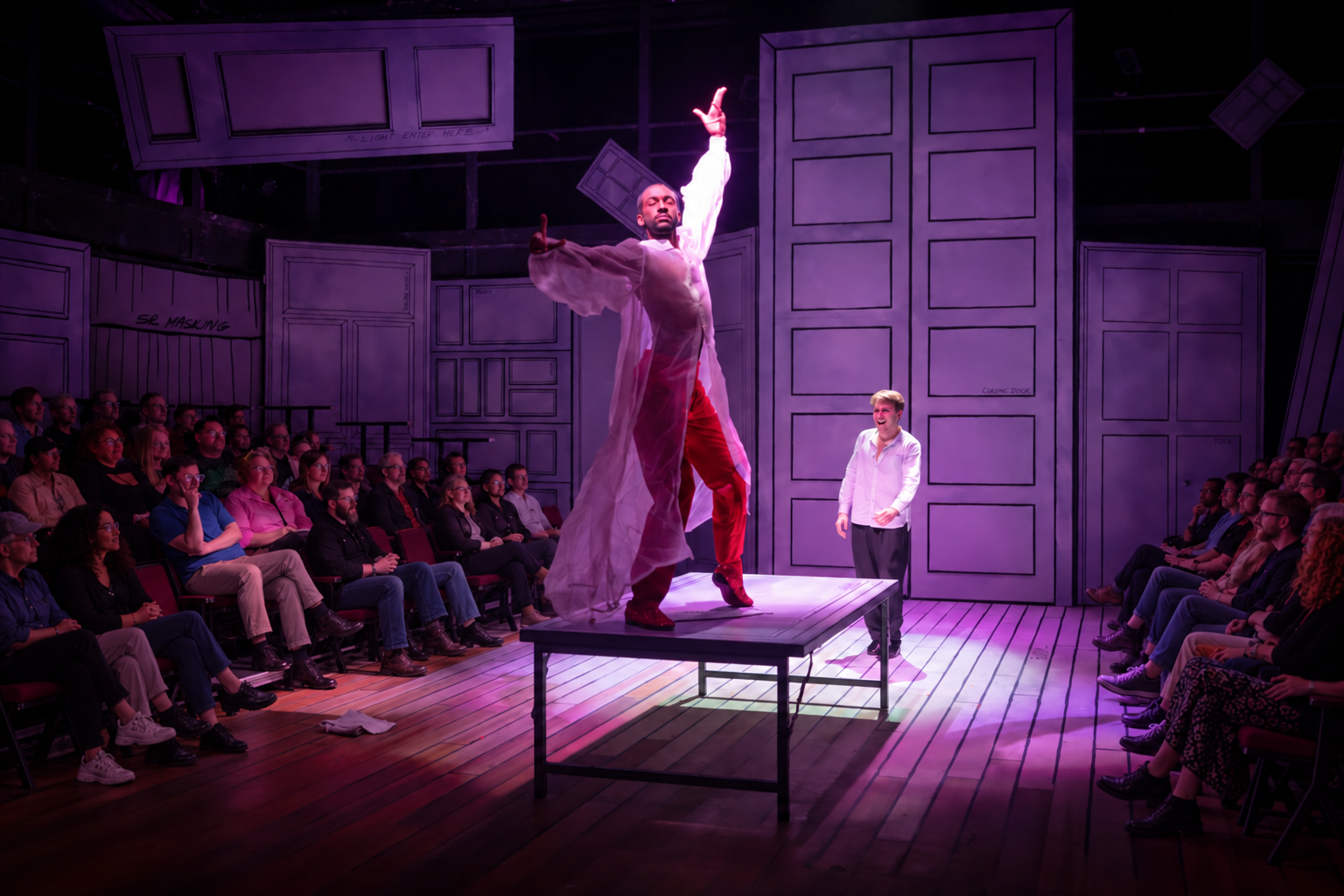
University of Florida · 2024 · Directed by Manuel Simons
Everybody
A world built to look like a play.
A journey that refuses to remain one.
God has come
to the theatre.
In Branden Jacobs-Jenkins’s contemporary reimagining of the medieval morality play Everyman, Death arrives with a summons: Everybody must account for the life they have lived. Everybody asks for company on the journey. Friendship, family, possessions, and love each become more than ideas when they stand before us as people.
My production began with a question: what if God appeared in the very theatre where the audience had gathered? The familiar blackbox became both the site of a performance and the place where Everybody’s reckoning might actually be happening. From the start, the line between staged event and lived reality was meant to feel unstable.
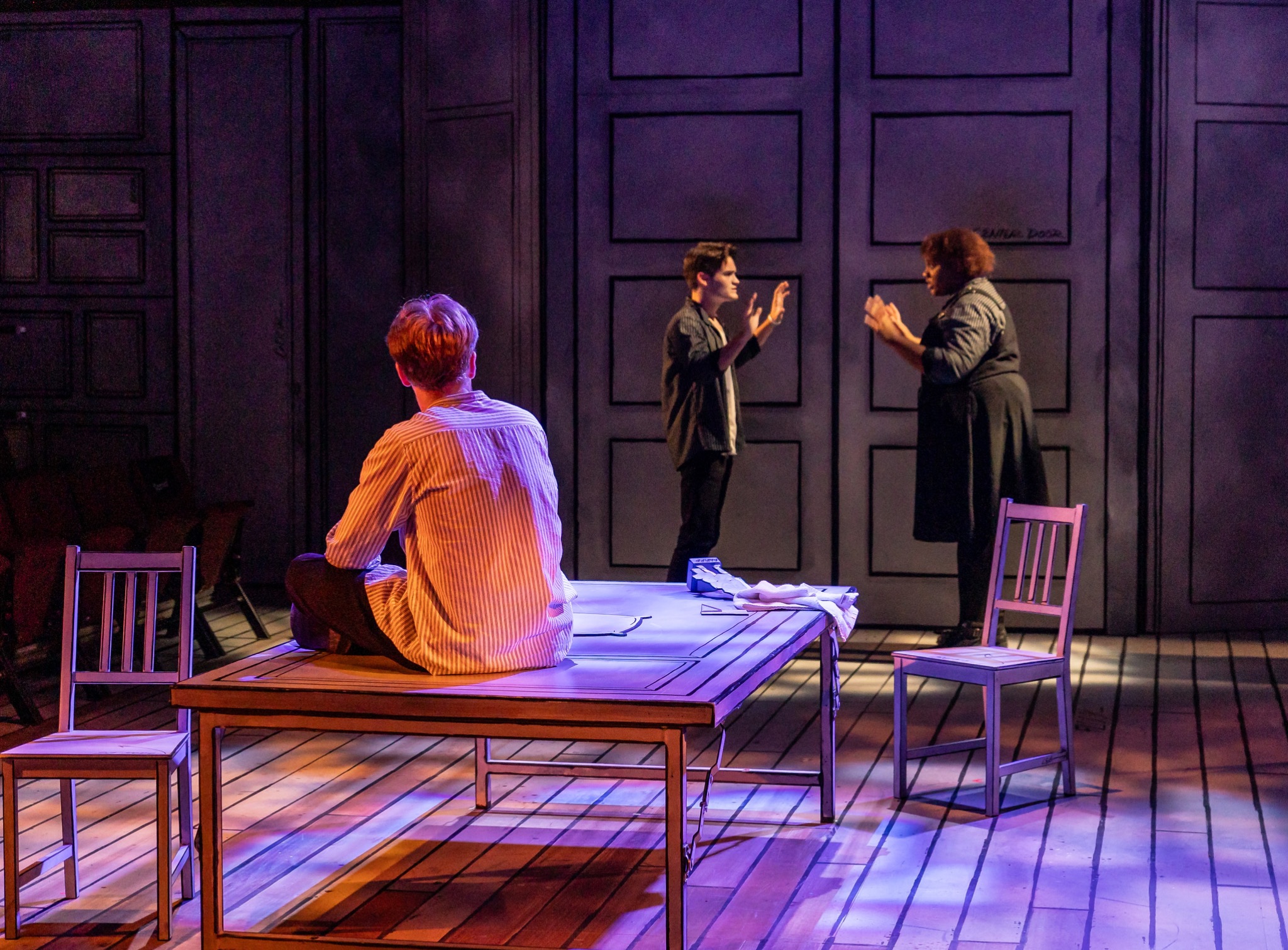
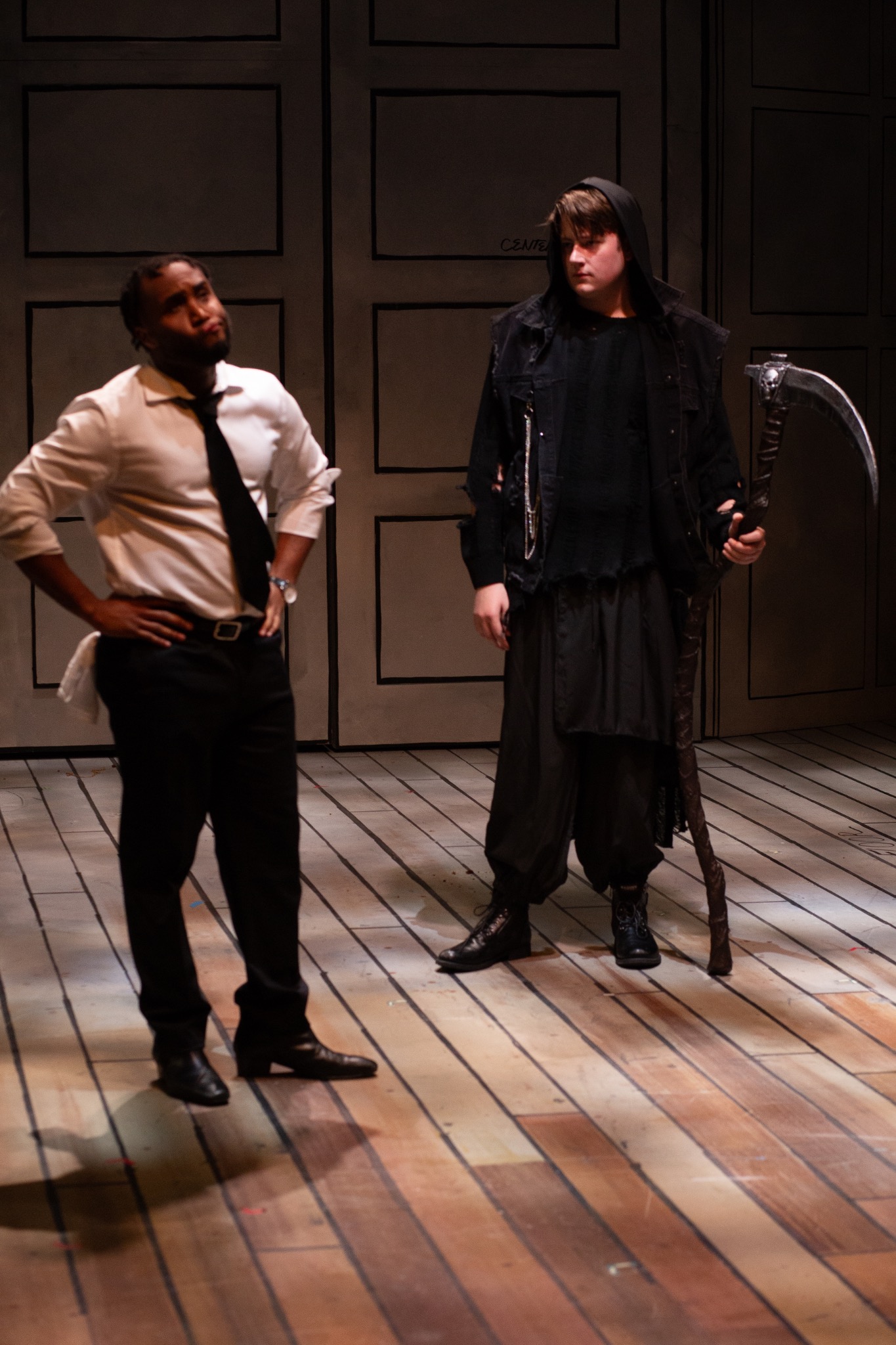
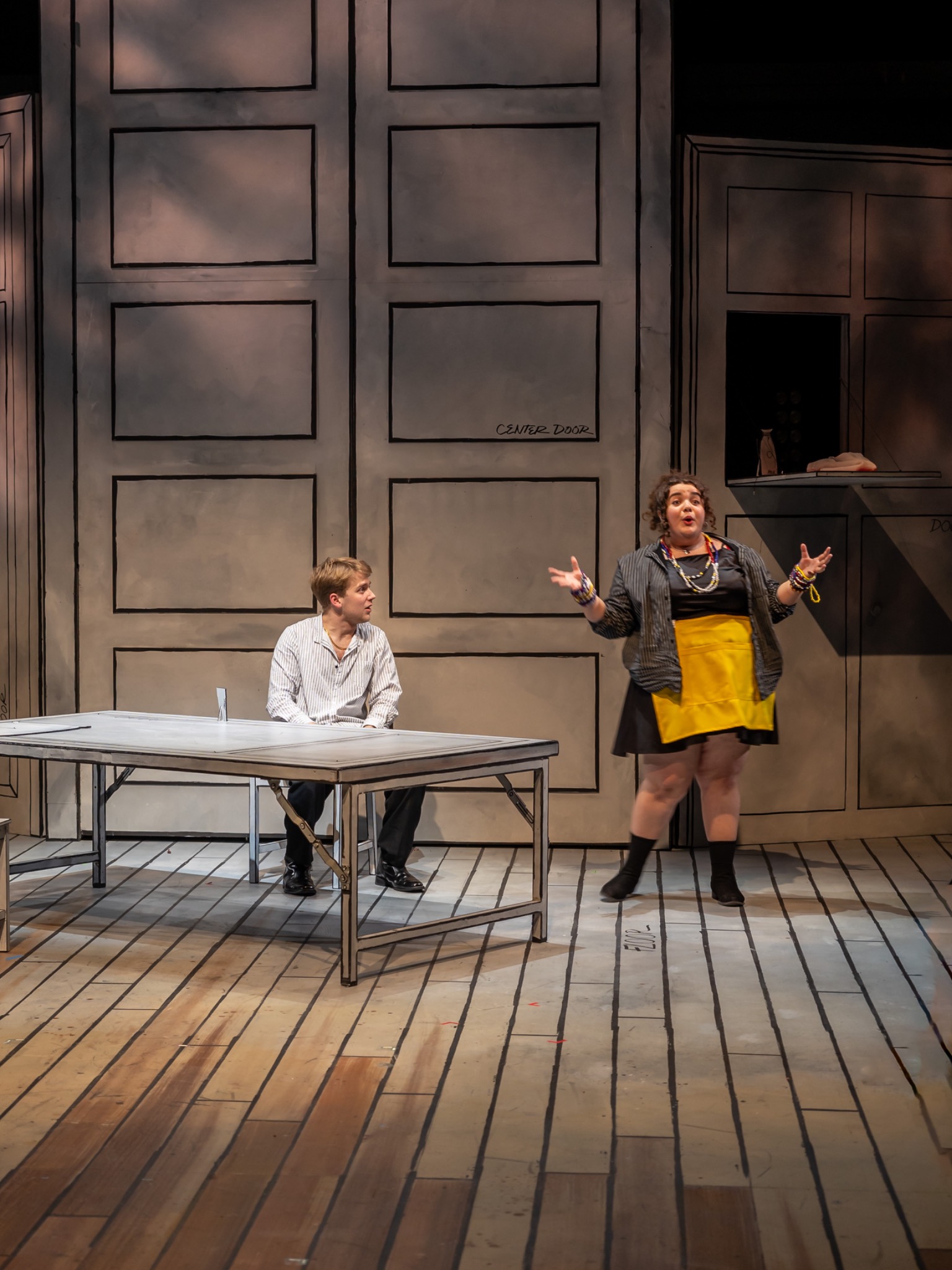
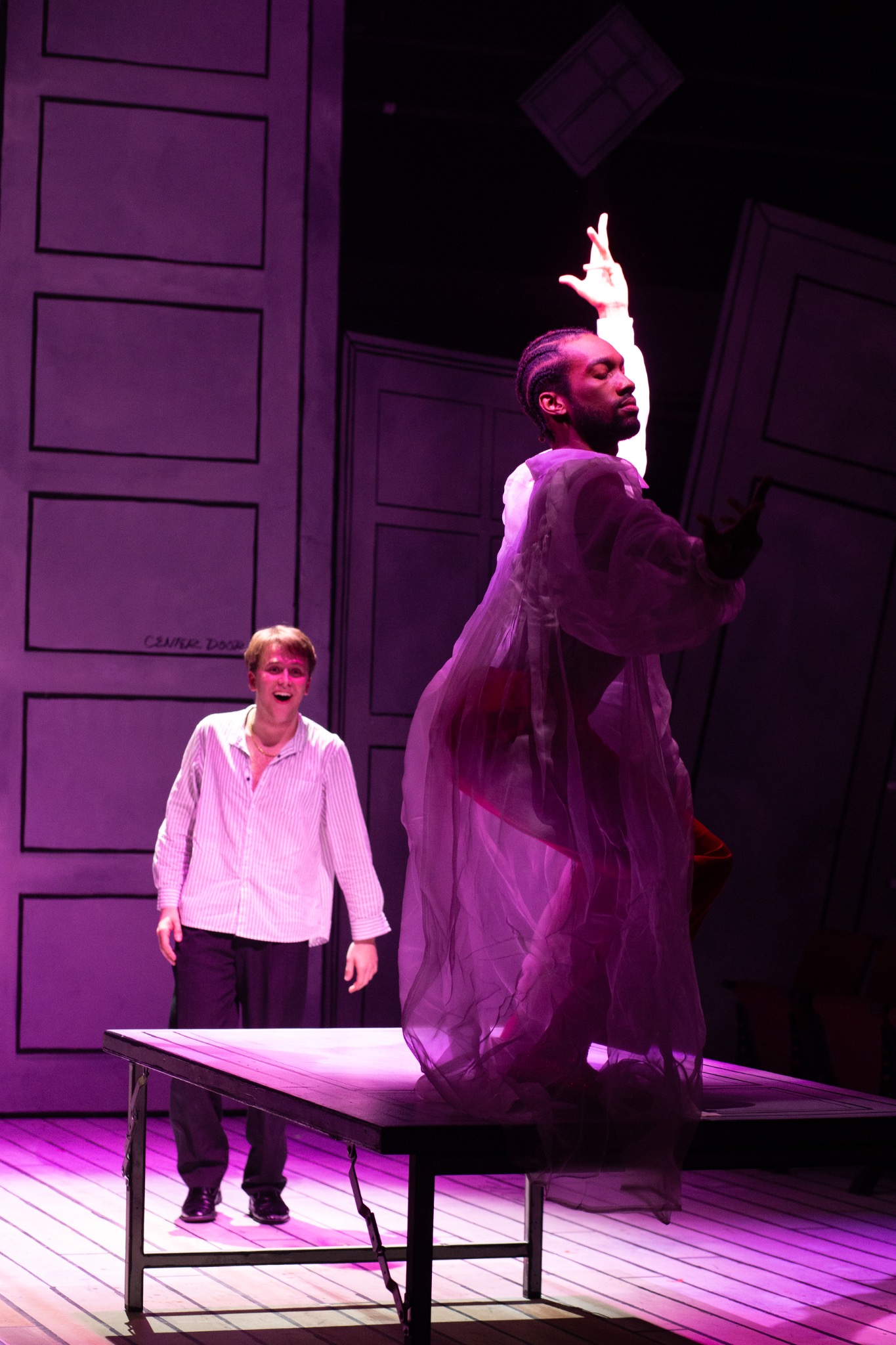
Look at the set.
Then look behind it.
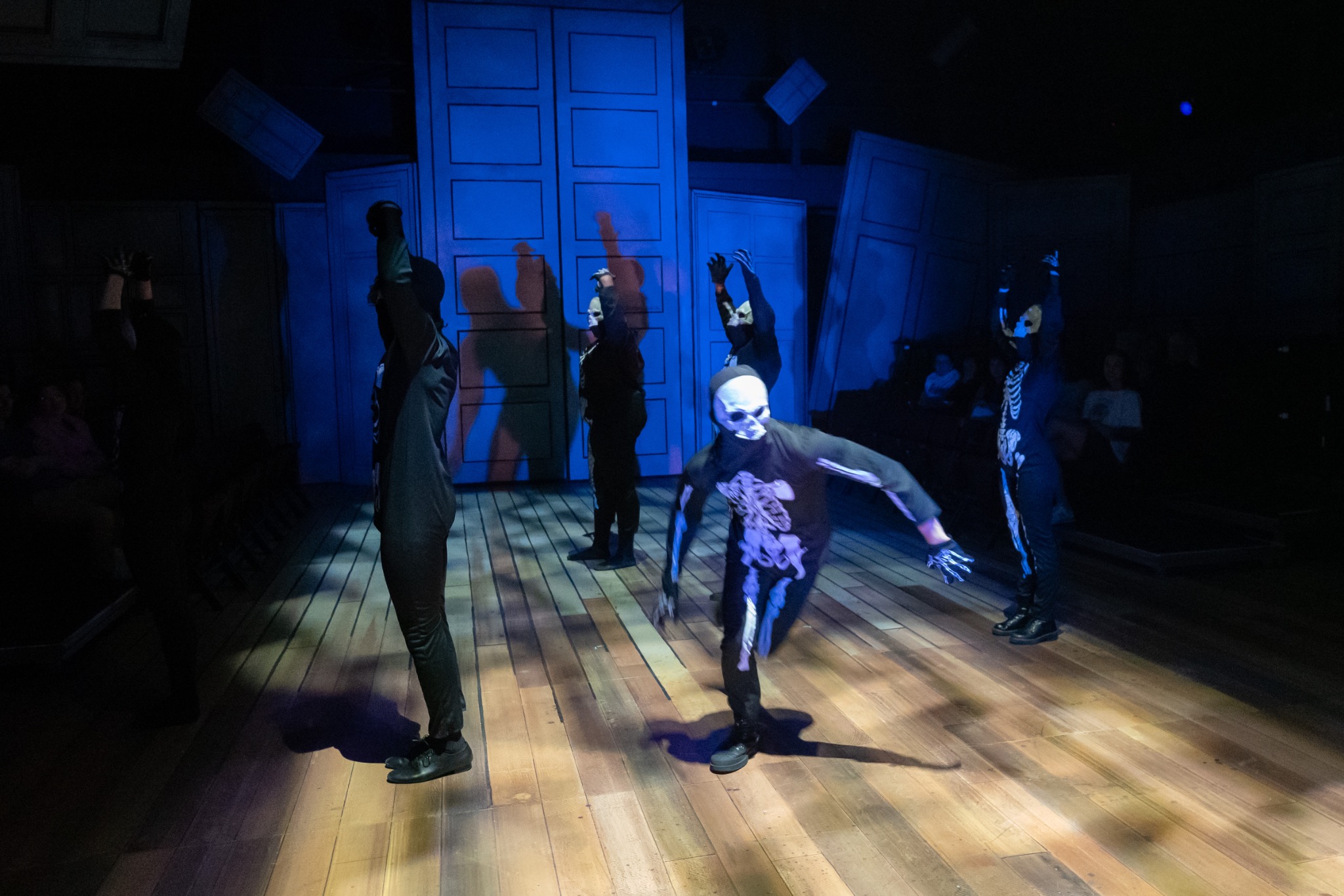
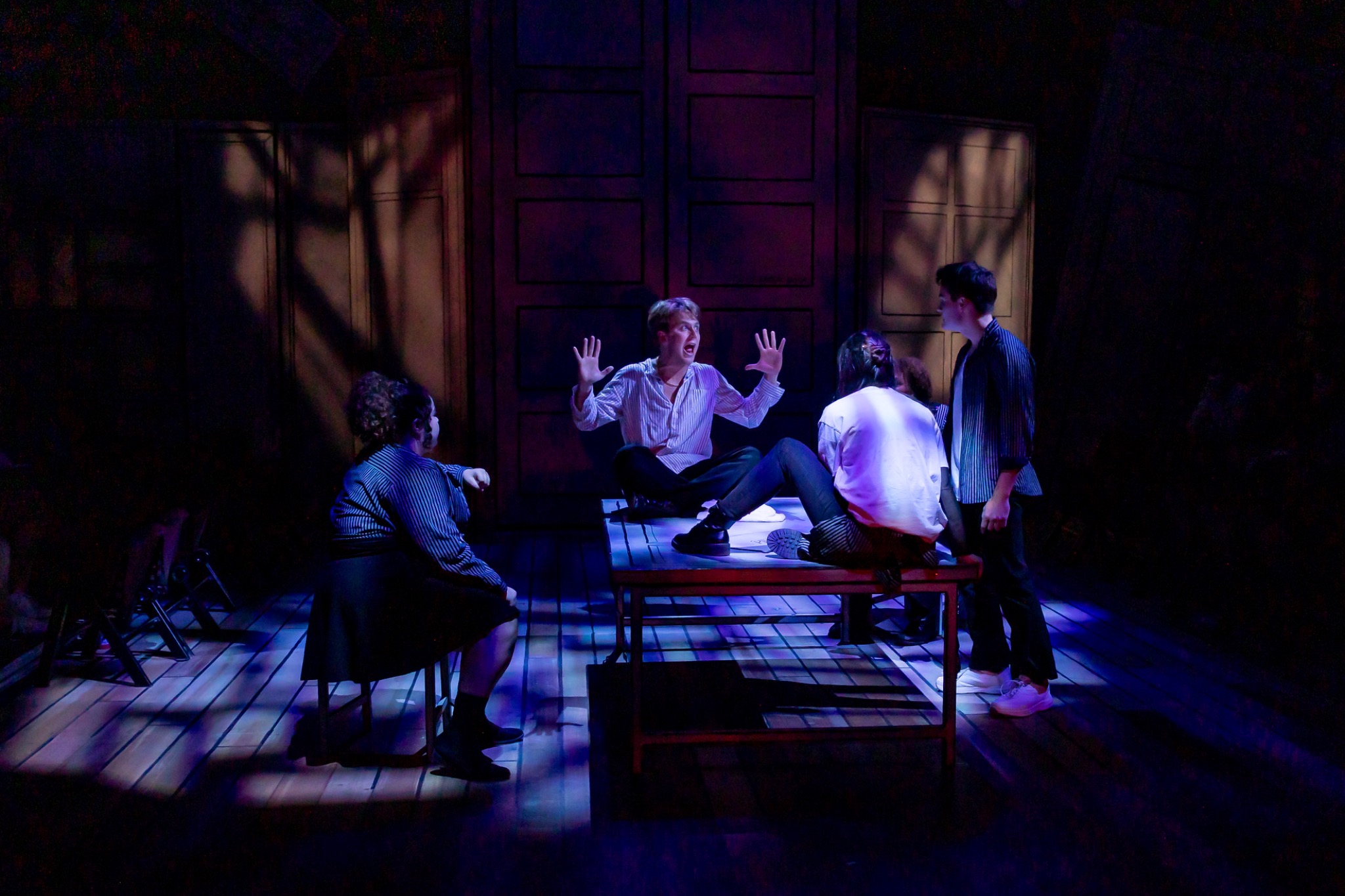
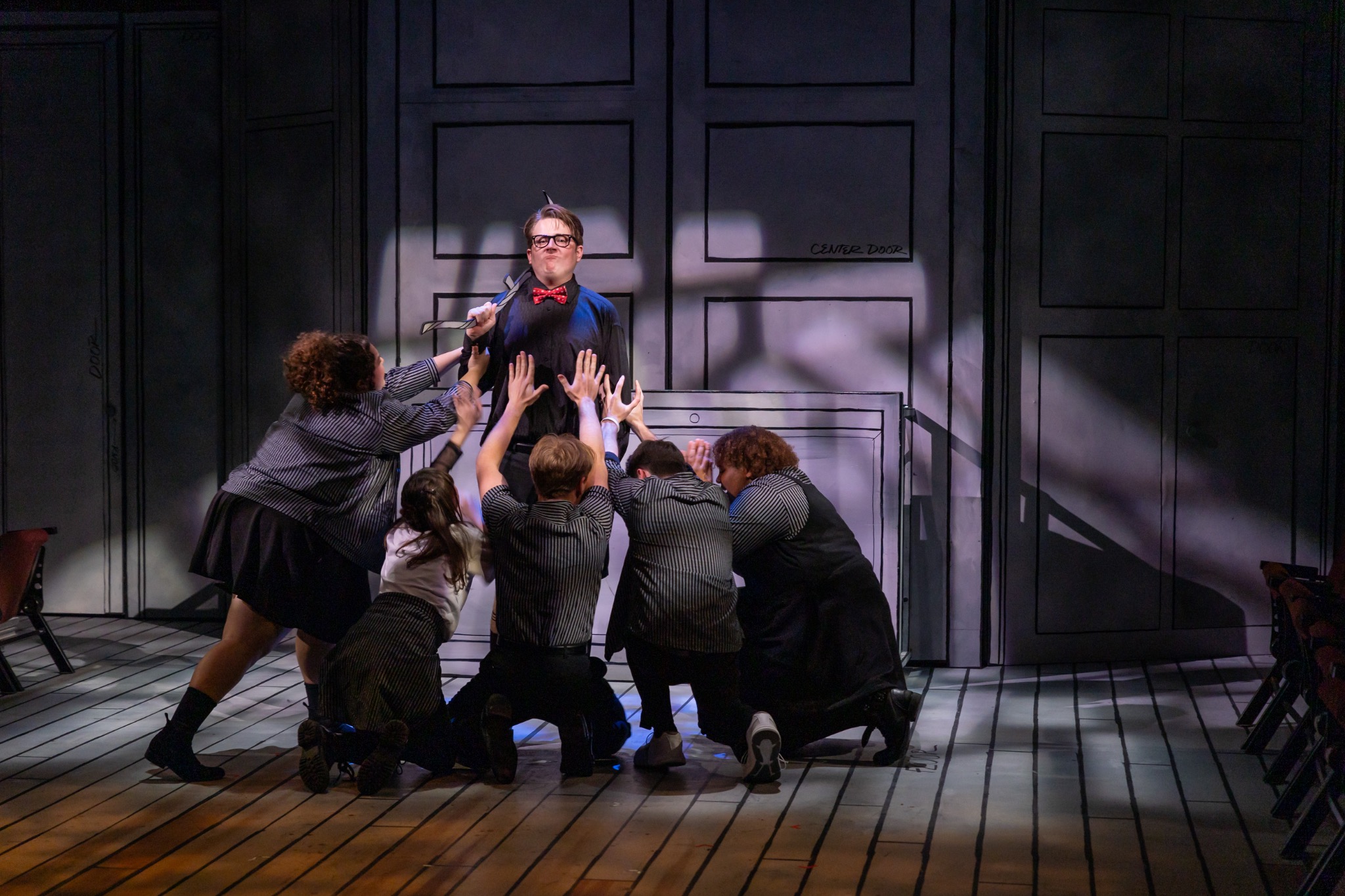
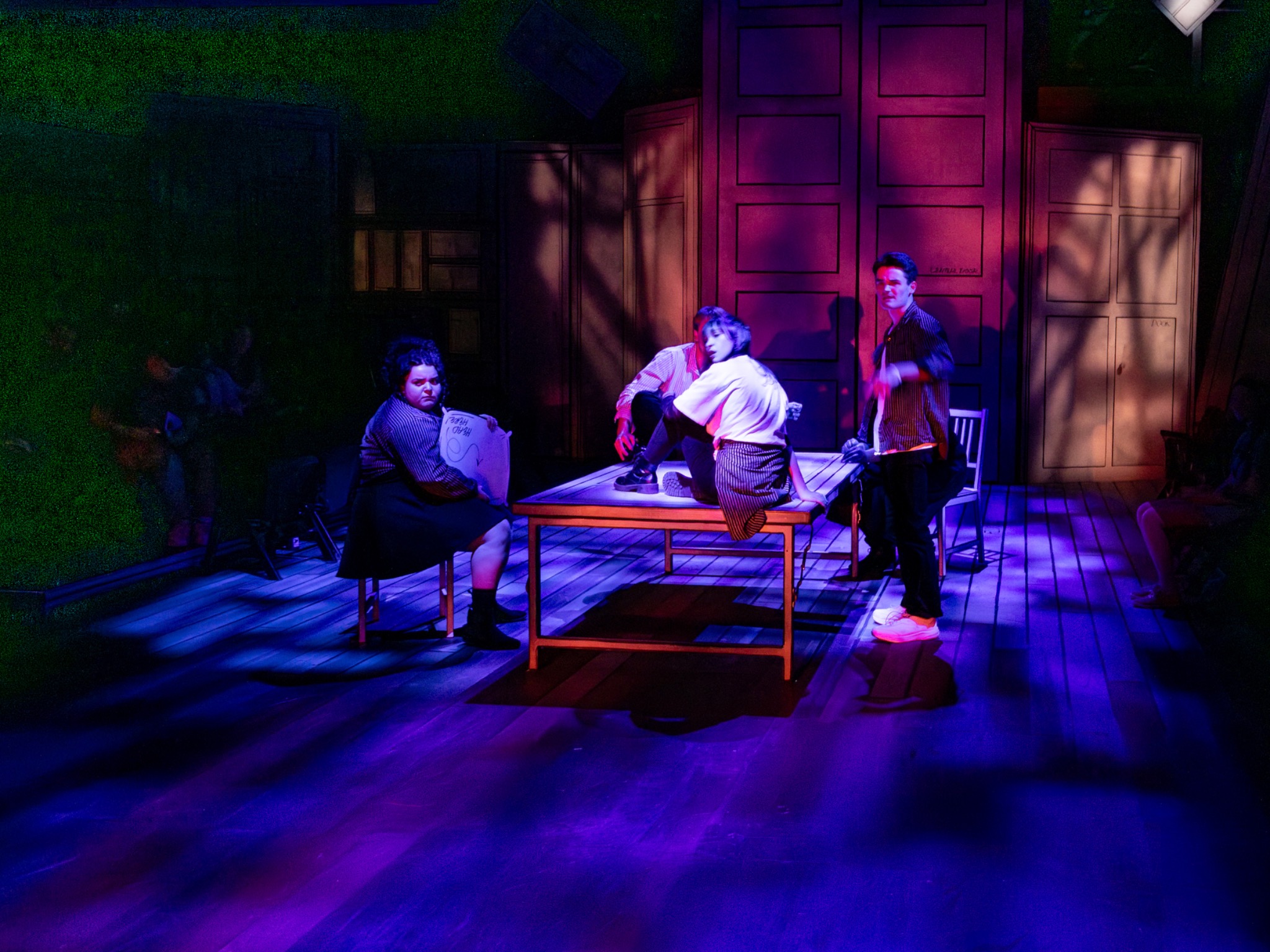
The concept placed a set within the blackbox: a café, Everybody’s bedroom, and a middle-class living room. These spaces were imagined as deliberately flat, bright, and cartoonlike. A cup could be a painted silhouette; a table might be only the words “COFFEE TABLE.” Even the braces, casters, and other means of theatrical construction could remain visible.
That exposed artifice mattered. Everybody cannot be certain whether this is waking life, a dream, or a dream inside another dream. The scenery offered the audience the same uncertainty. A realistic sound might issue from an obviously two-dimensional object; a figure might cross out of a scene and into the audience. The performance could keep changing the rules of what counted as real.
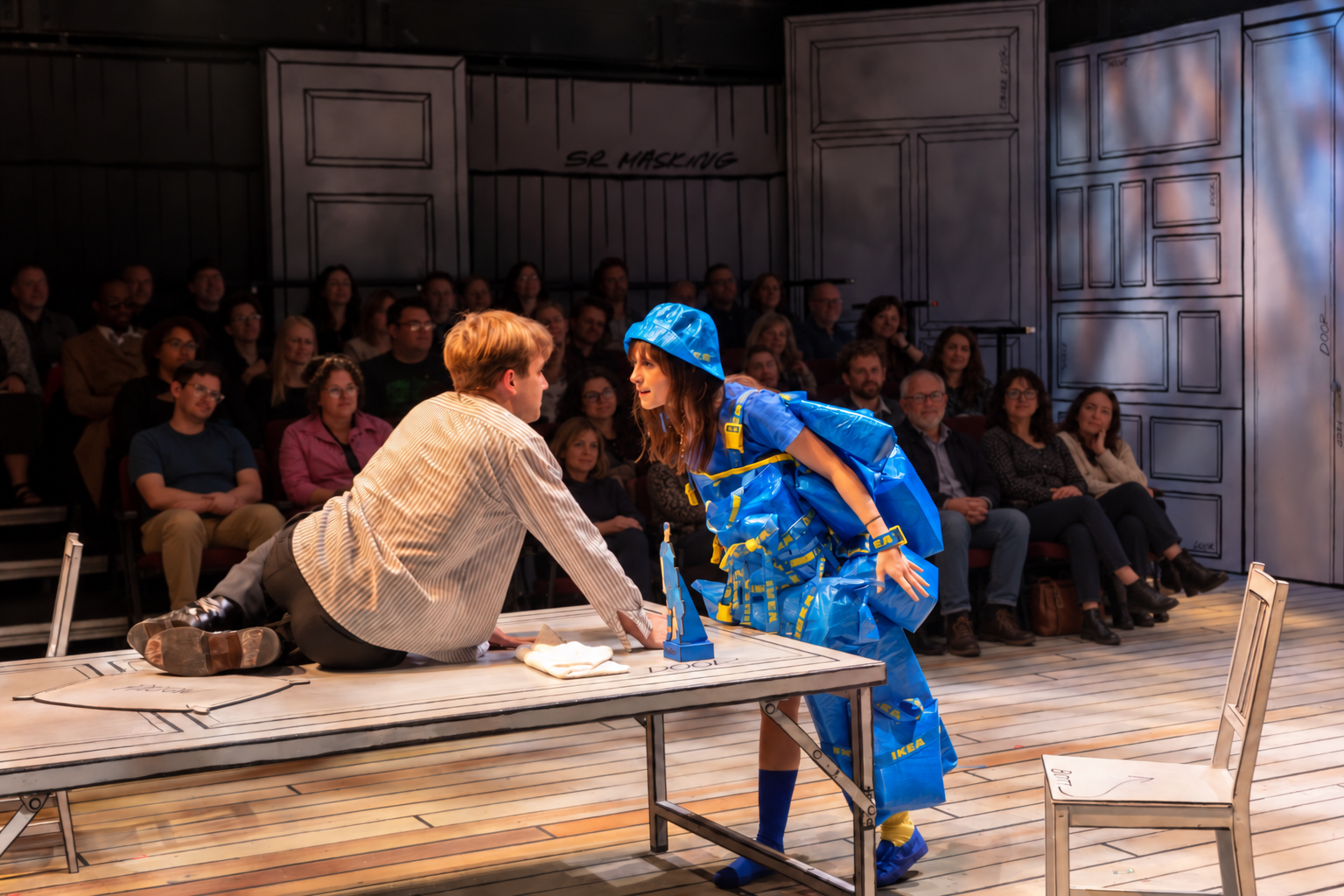
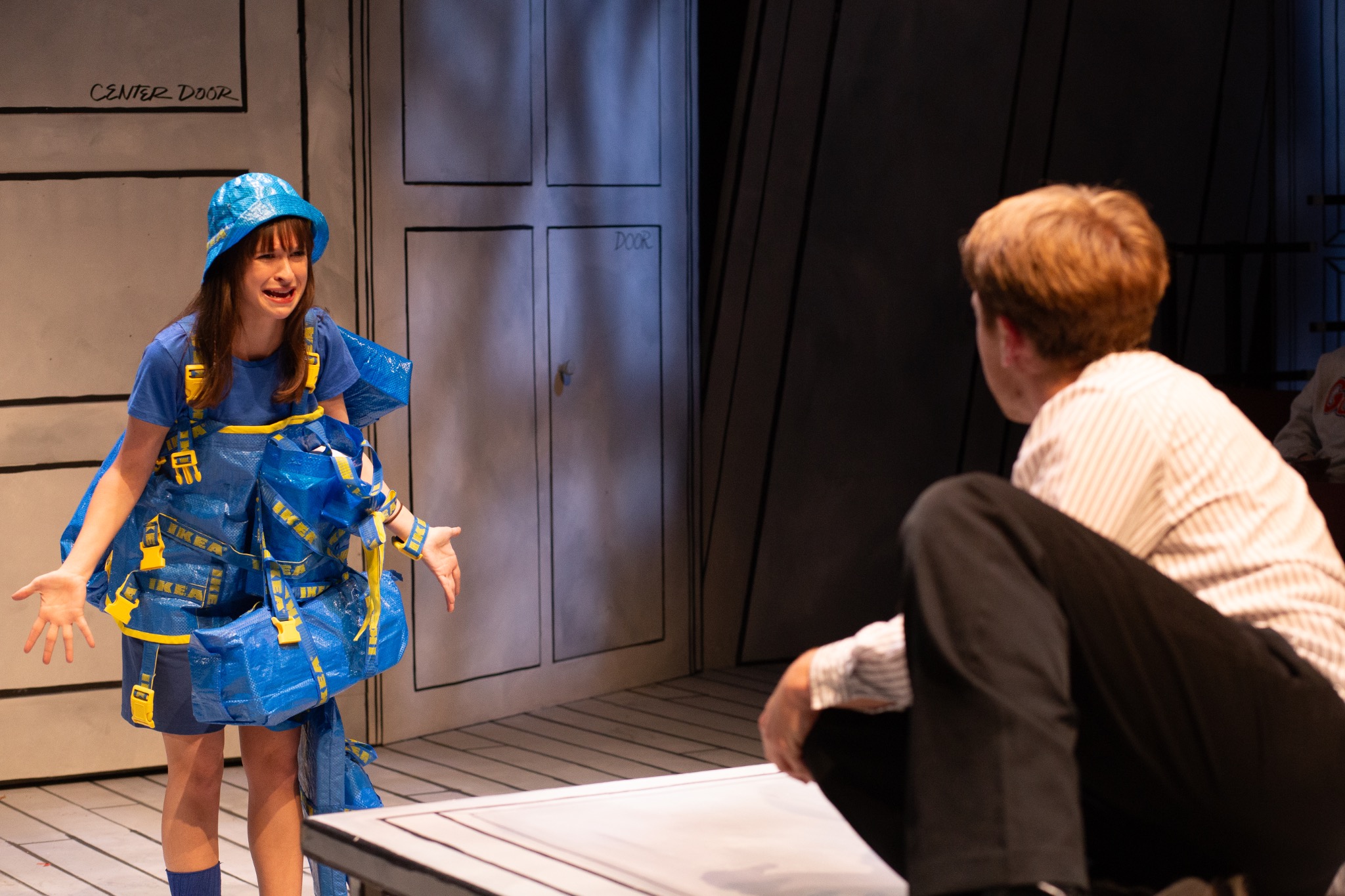
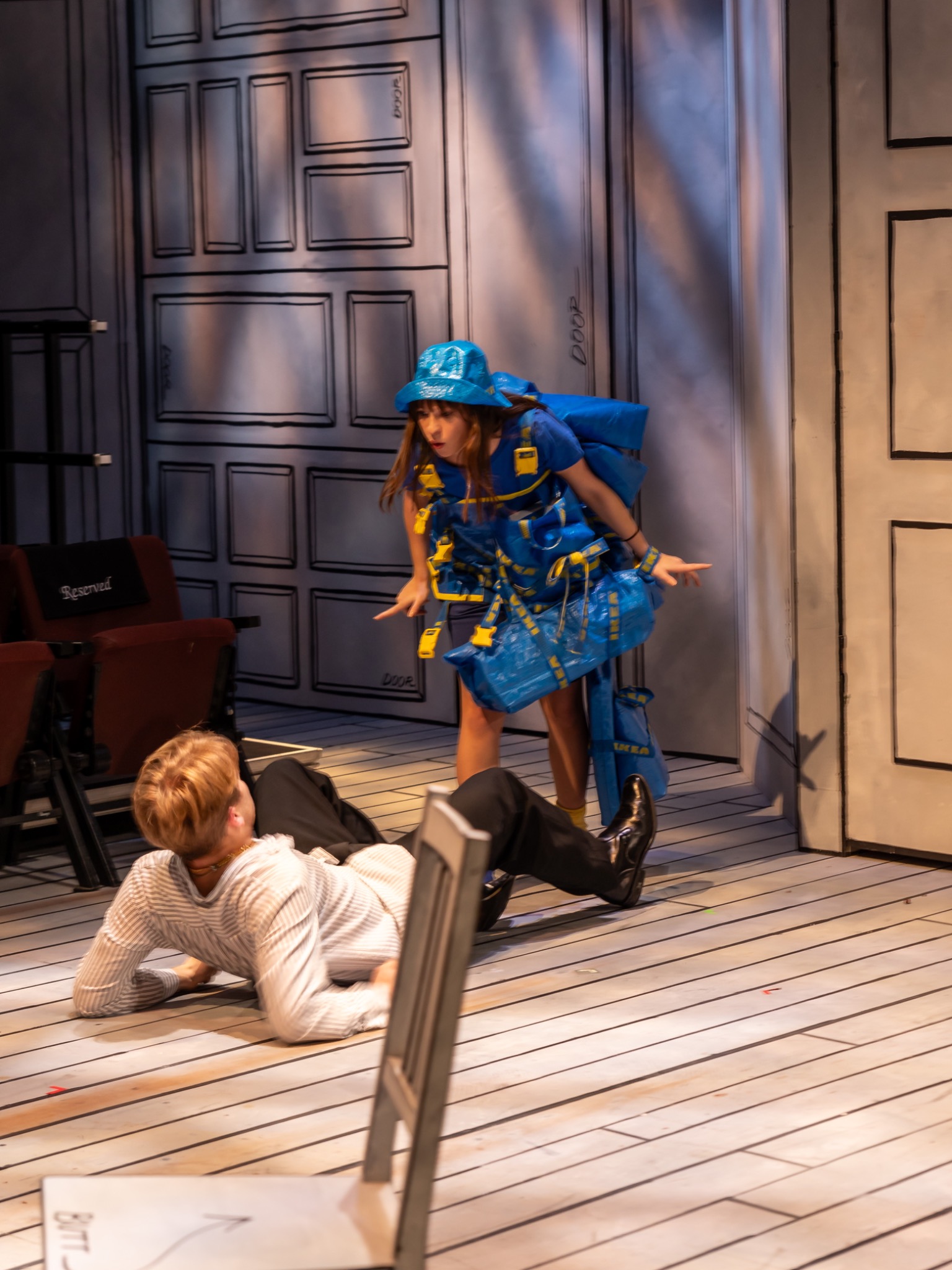
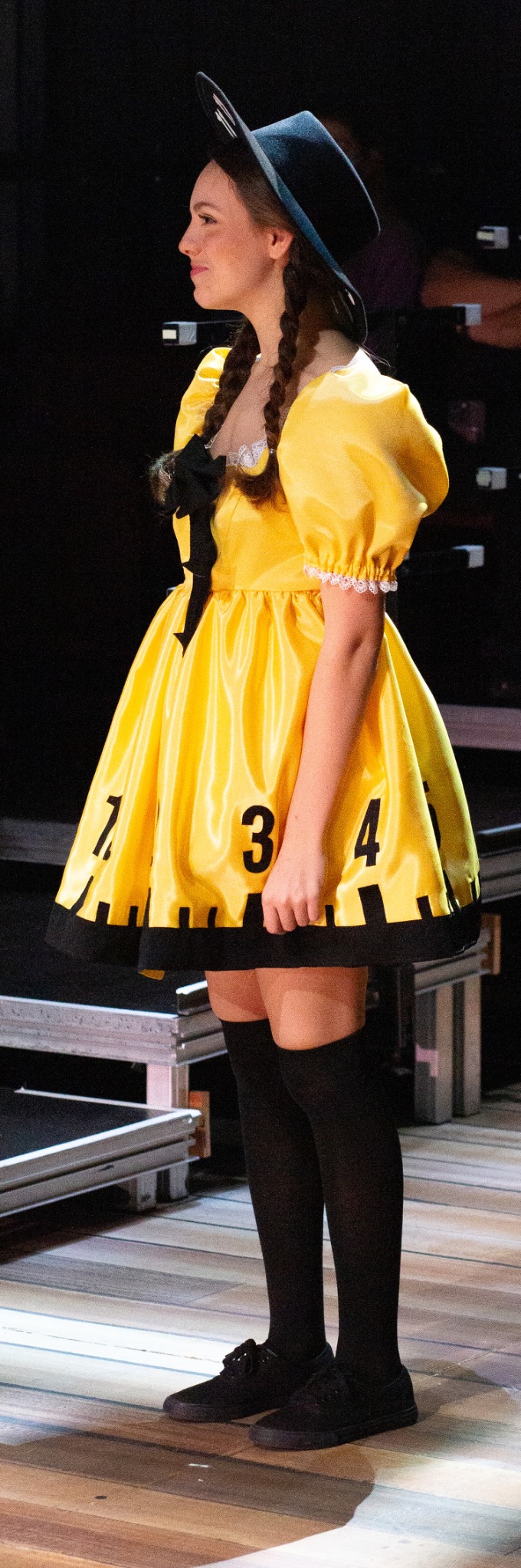
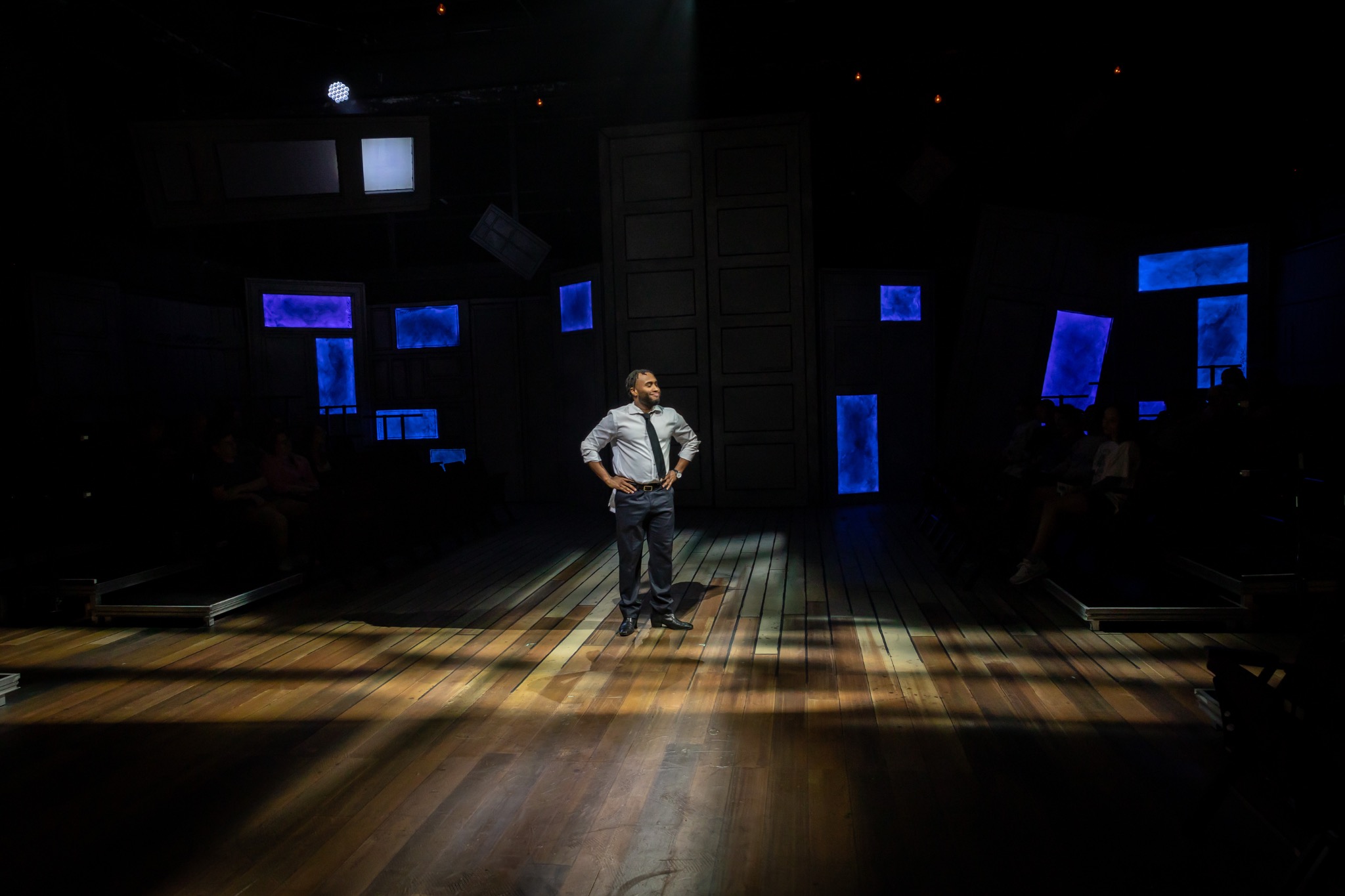
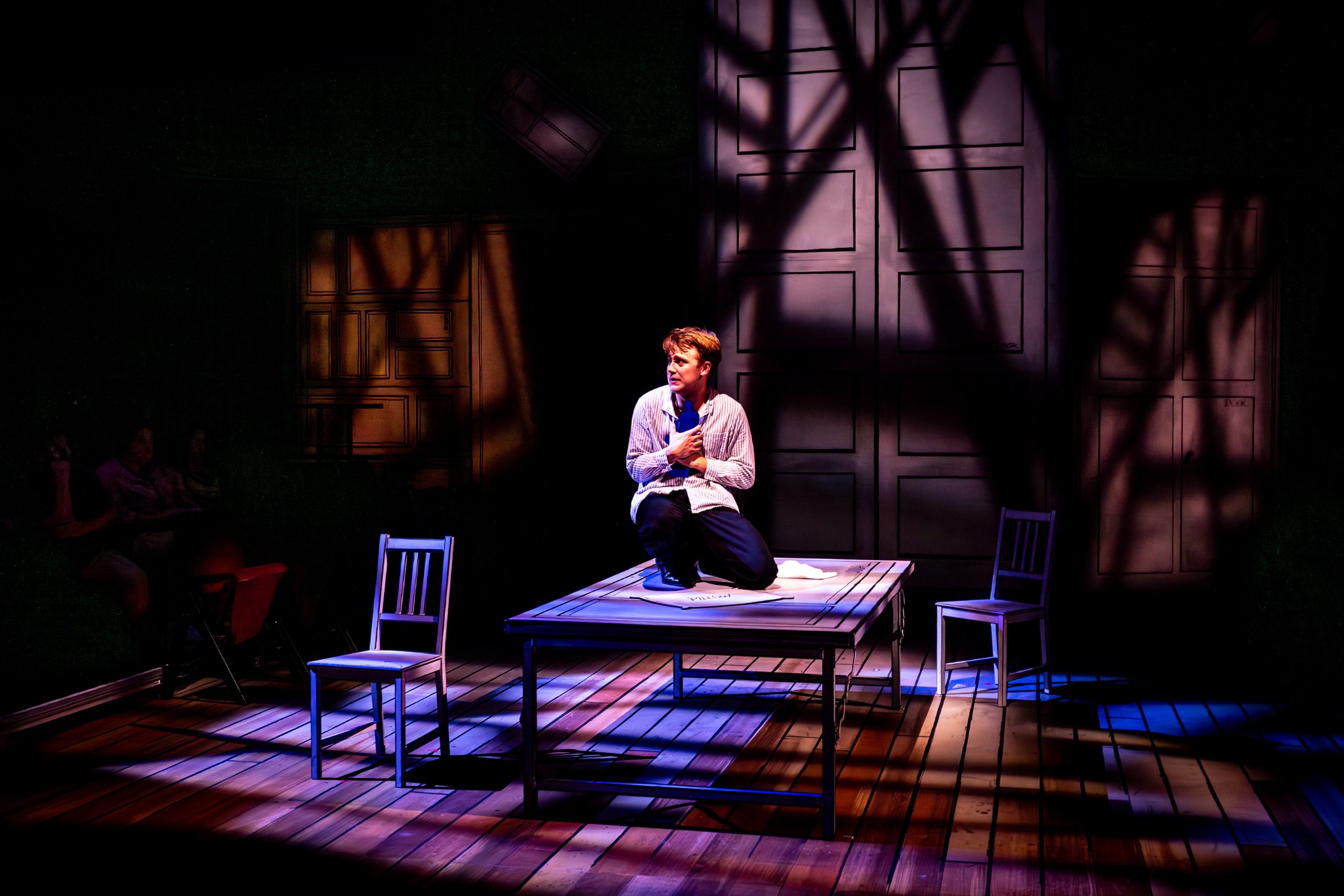
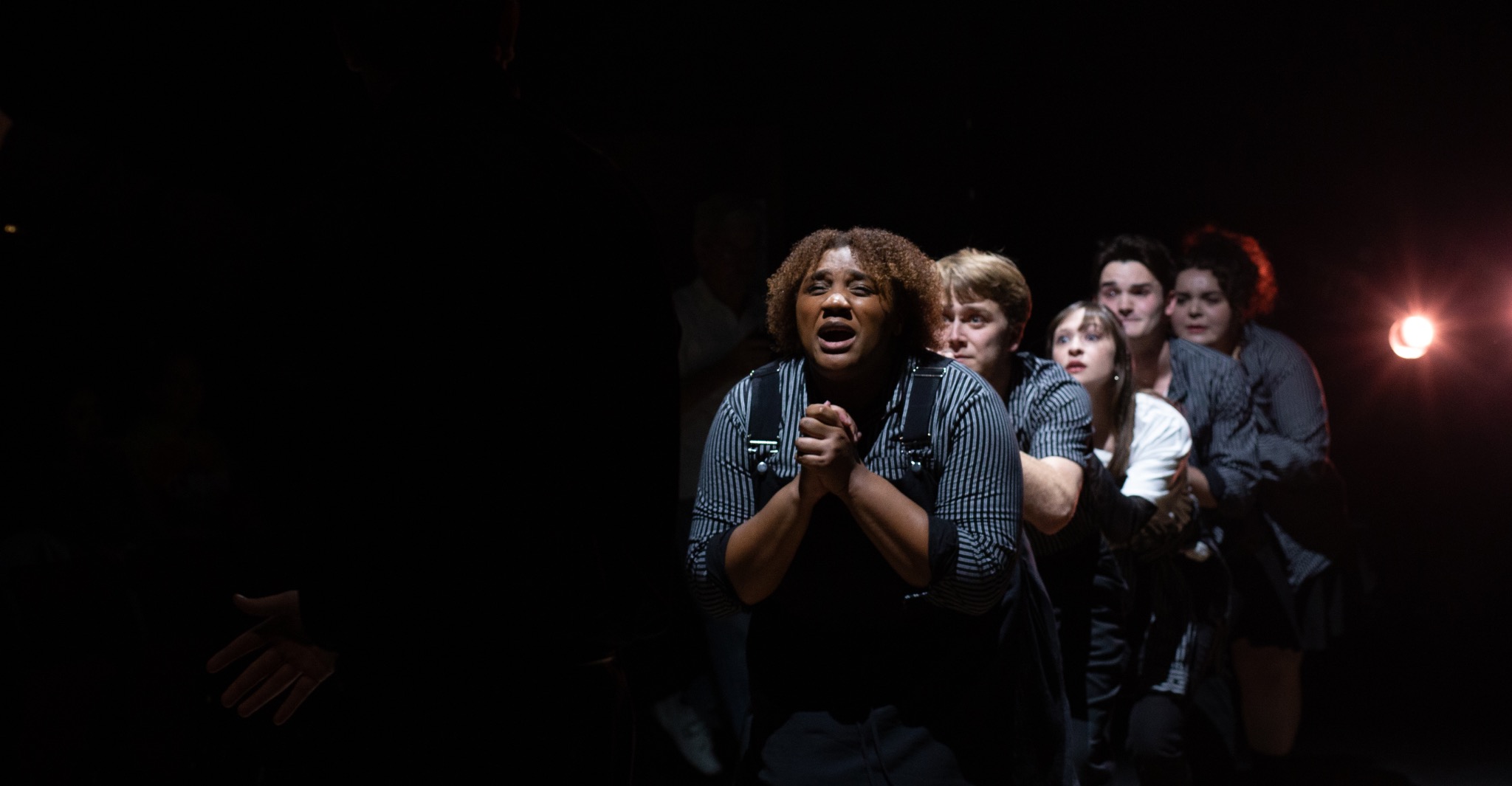
THE COMPANY IN MOTION
One body.
Many lives.
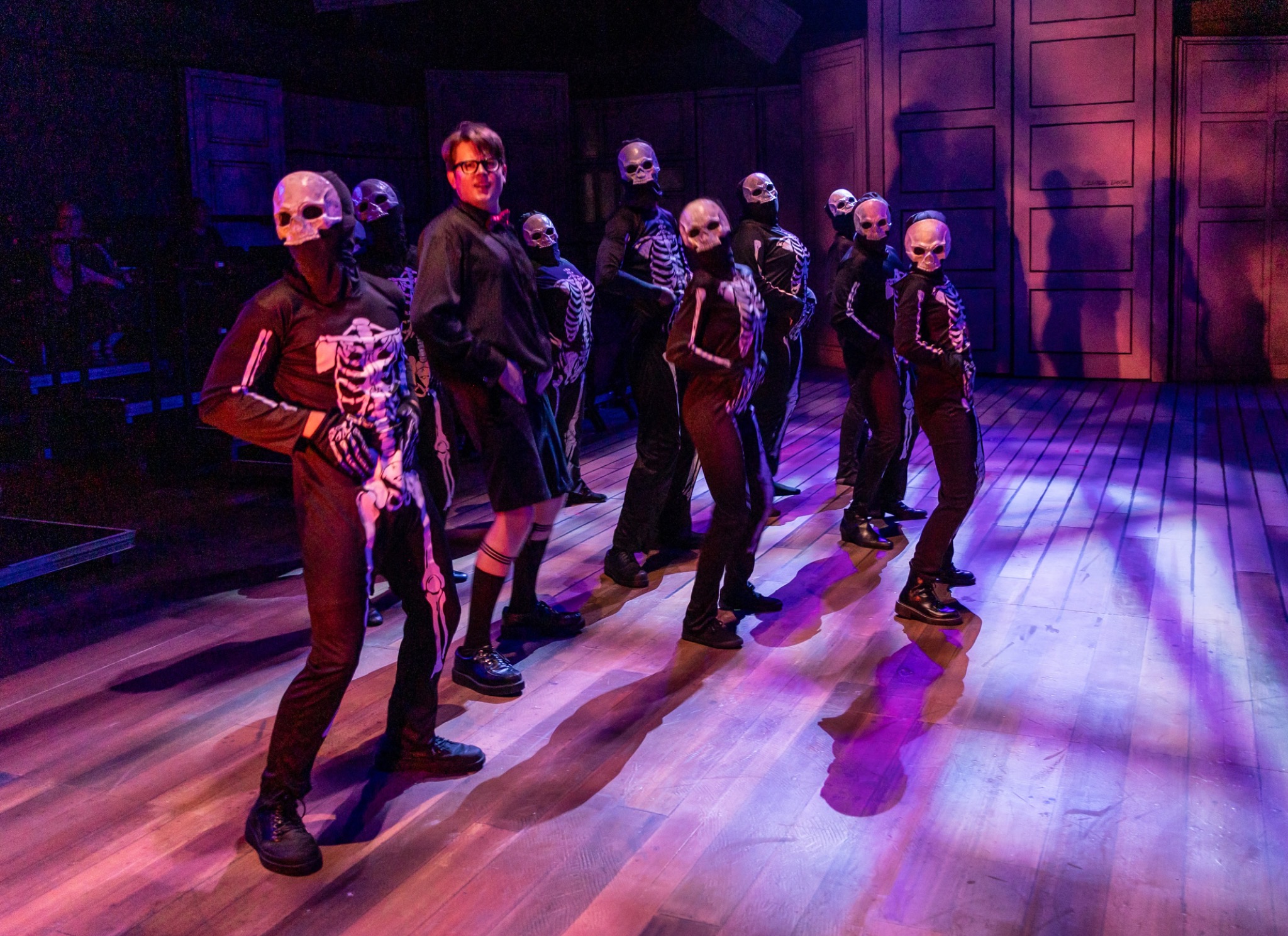
And then:
the earth.
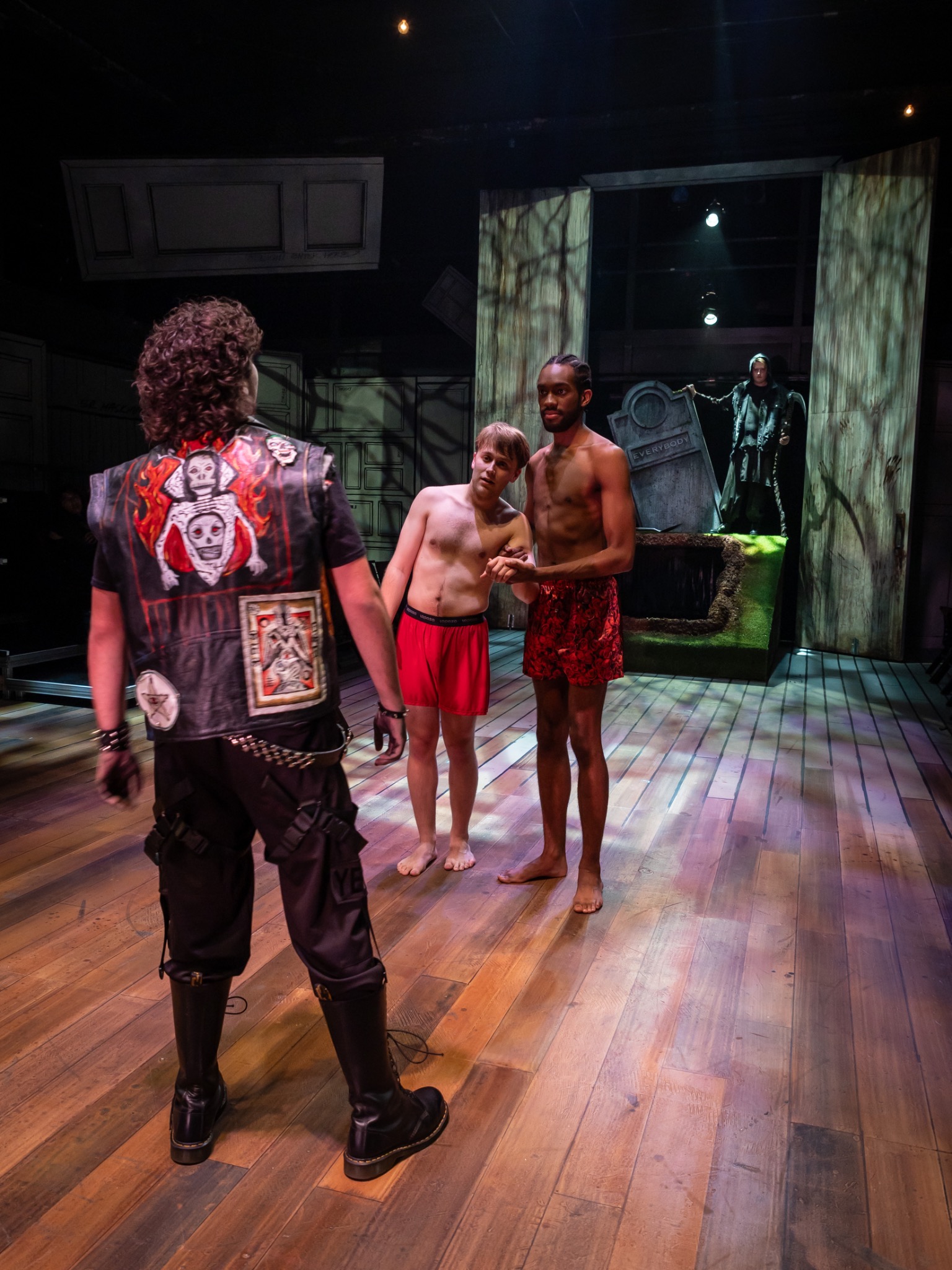
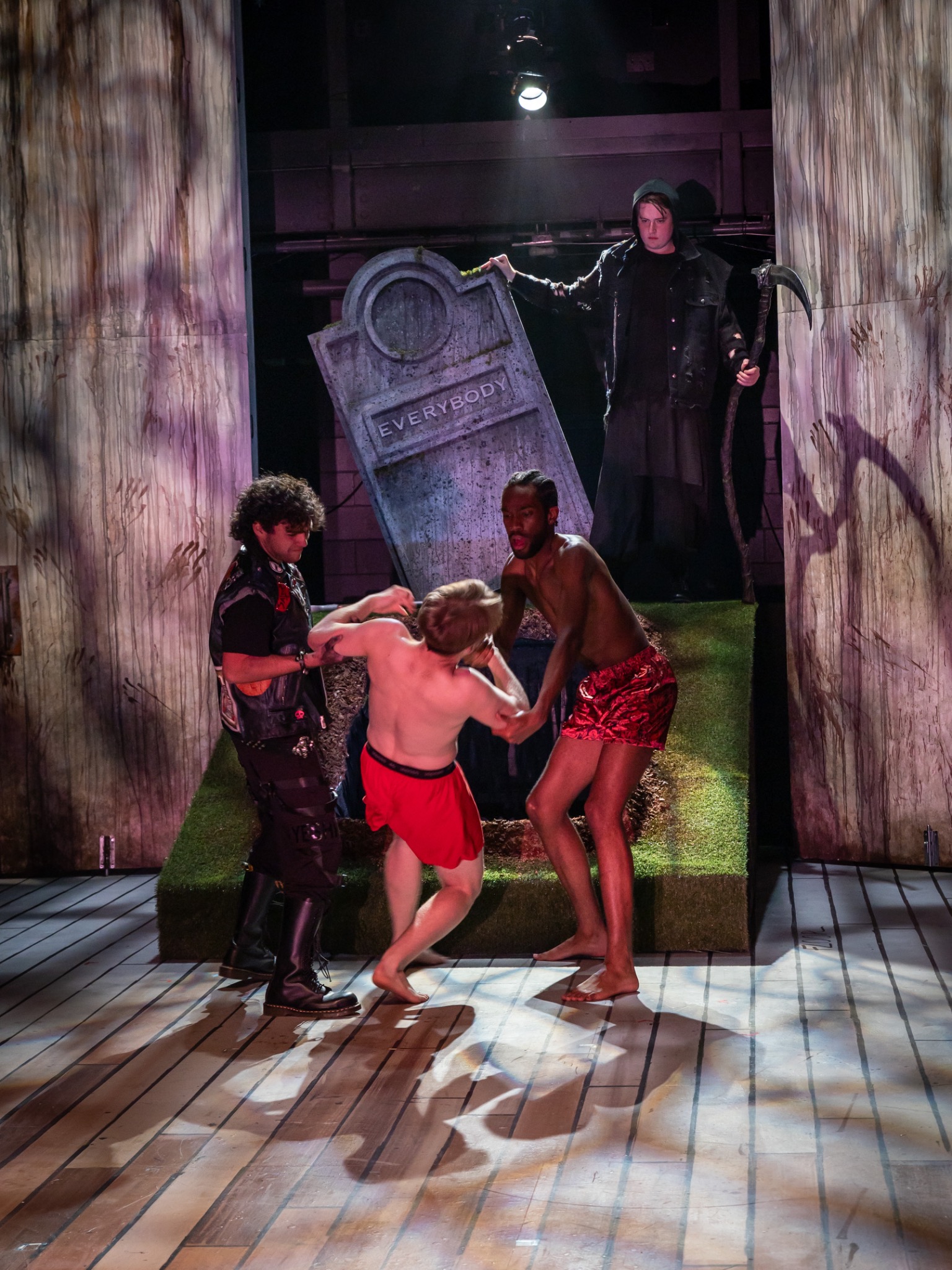
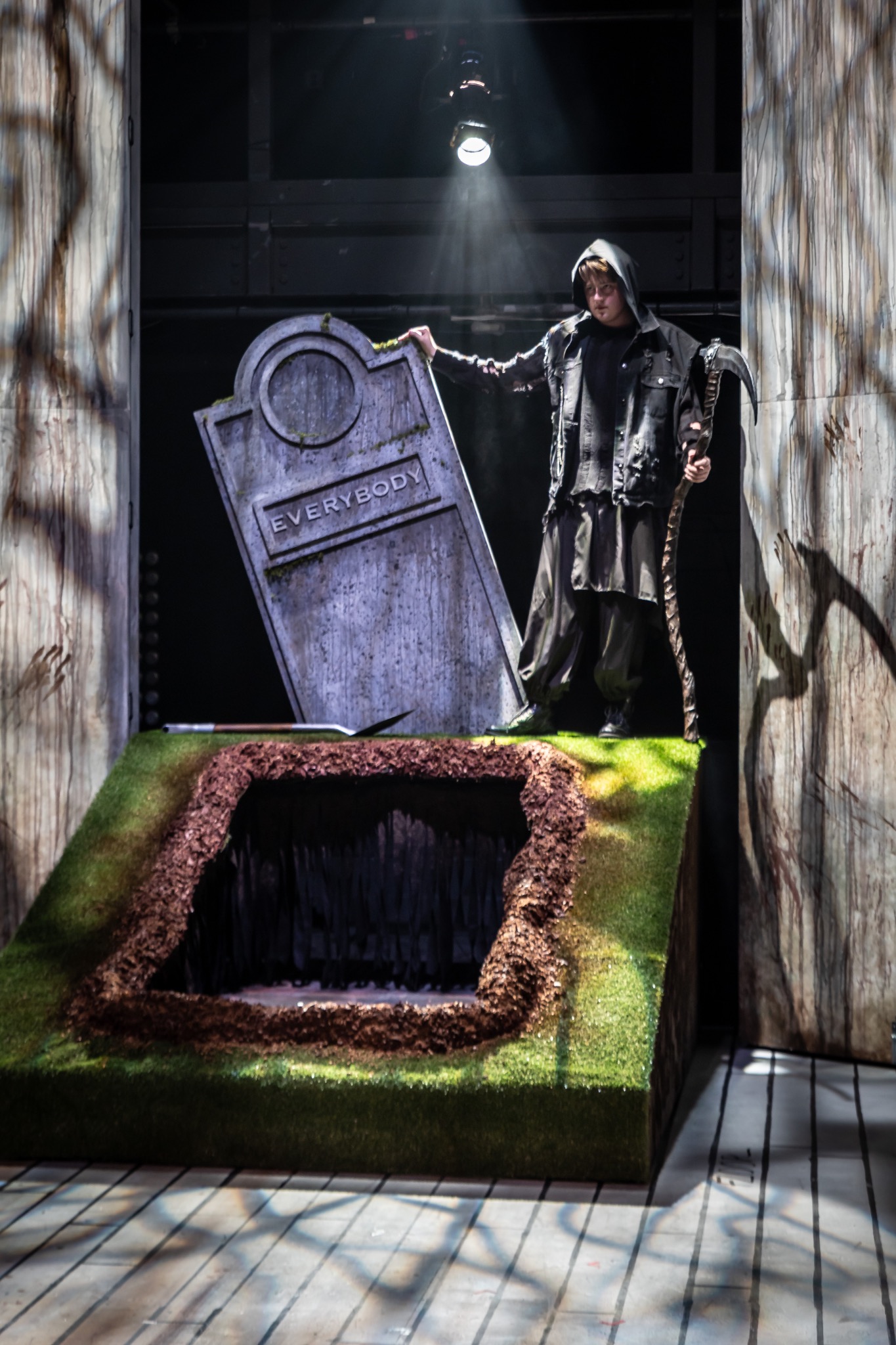
The directing concept called for a decisive break in the visual language. Where the earlier world could be painted, thin, and visibly assembled, the grave would arrive with soil, weeds, leaves, dampness, and depth. The suddenly tangible earth would make mortality impossible to keep at the safe distance of an allegory.
Light, sound, costume, and props were conceived in relation to that shift: sometimes amplifying the cartoon world, sometimes contradicting it with ordinary human detail, and finally allowing the grave to feel startlingly present. The play’s humor and its fear belong in the same room.
04 / WHY THIS PLAY
We do not get to return and correct the harm we do.
At the heart of my reading of Everybody is an urgent, simple demand: be kinder to one another and to the living world. The production’s theatrical games were a way to bring that demand closer. If everything around us can turn out to be a representation, our actions toward one another still have consequences.
More directing work ↗